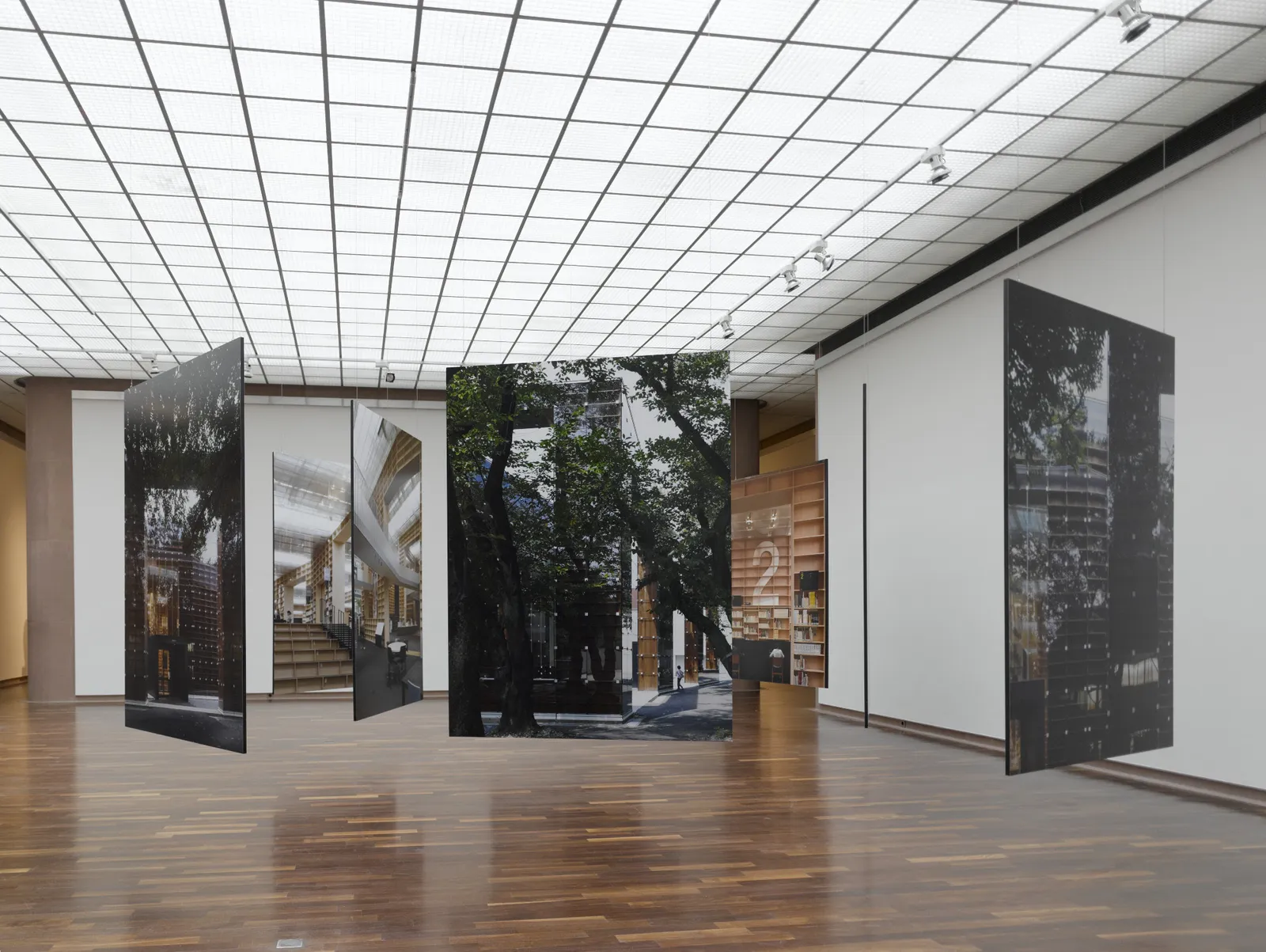
PRINTWORKS ↗DOCUMENTED PROJECT REFERENCEPhotographic works installed at Kunsthalle Bielefeld
GIGANT / ART
Your image, understood before it is made.
A Berlin photographic-production partner for artists, galleries and museums. We look closely at the image first—then work through its material, mounting and place.
A file can hold more than information. It holds a particular range of tone, a way of seeing, and choices made by its author. We take time to understand those choices before discussing how the work should be printed, finished and encountered.
You retain the authorship. We contribute production knowledge, careful image-making and the agreed practical scope.
The image leads.
The material follows.
01 / A CONVERSATION ABOUT THE WORK
Bring the image. Bring the question.
A first conversation might begin with one image, a body of work, an exhibition plan or a practical question about a wall. We can review supplied artwork and the intended viewing context together, keeping the artist’s authorship and the project brief at the centre.
Before a print is made
We can review the supplied file, dimensions and intended viewing distance together. Where it is useful, tonal or colour assessment and project-specific samples or a soft proof can help inform a decision.
01Image & file+
Discuss the supplied artwork, file format, image dimensions and intended output. We will flag questions to resolve before production.
02Tone & colour+
Look at tonal range and colour in the context of the work. Any assessment is project-specific and discussed with you.
03Samples & soft proof+
When agreed and appropriate, a project-specific sample or soft proof can support a review. It is a consultation step, not a certification or universal process guarantee.
02 / THE WORK IN A ROOM
Scale changes what an image says.
A photograph can hold a wall quietly, or alter the way a visitor moves through a room. We consider the intended scale, viewing distance, sequence and installation context alongside the image—not after it.
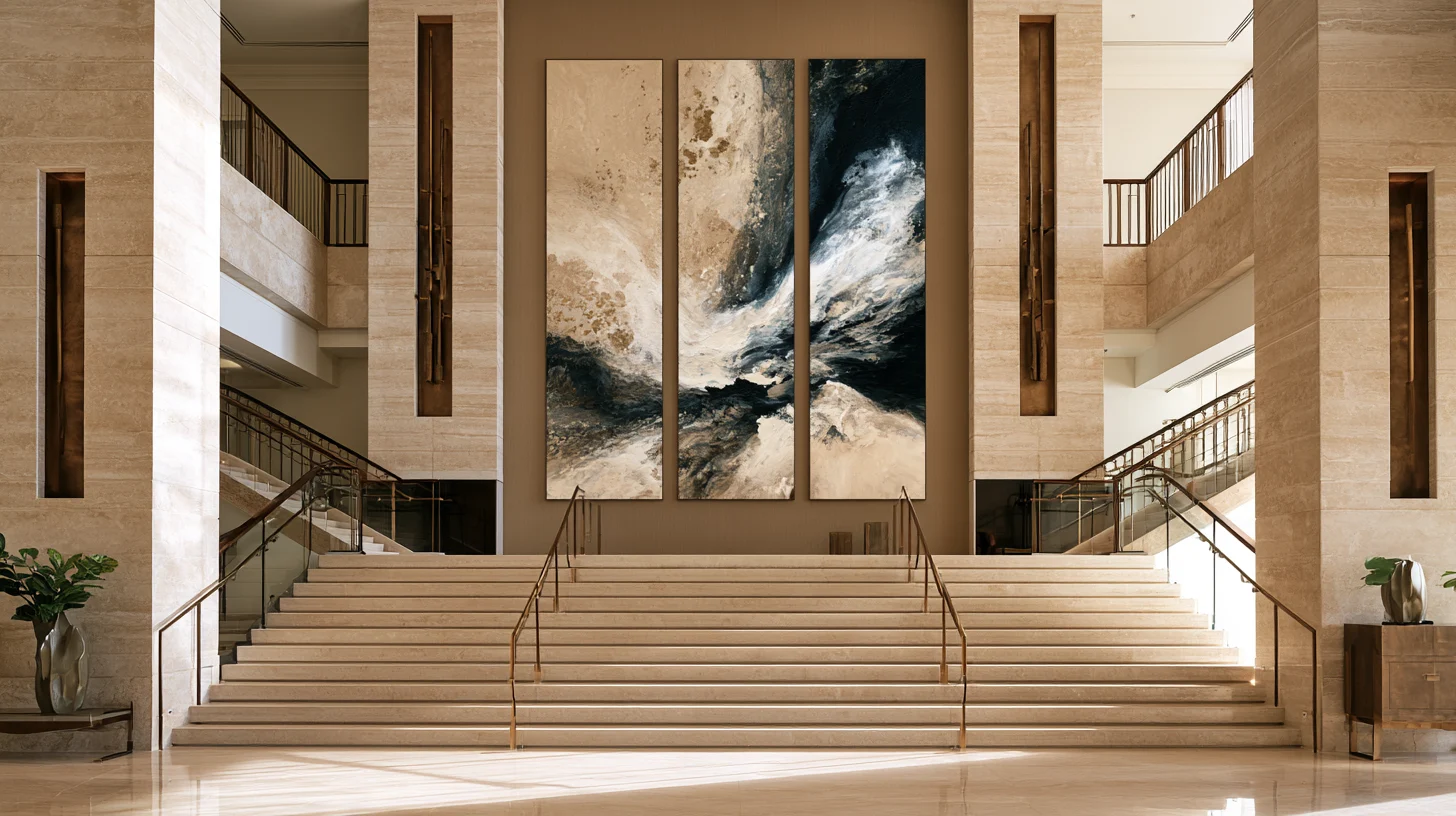
DESIGN CONCEPT / VISUALISATIONA placement study for a shared interior
STUDY / 01
Placement, considered before production.
A study of how a group of vertical works might meet a stone atrium: spacing, height and the interval between images. This is a design visualisation, not a commissioned or completed project.
DESIGN CONCEPT / VISUALISATION · NO REAL LOCATION IMPLIED
03 / PRINT × MOUNT × FINISH
Different constructions. Different readings.
Photographic printing and direct-to-substrate printing are distinct ways of making an image. The image, the surface, the viewing conditions and the project brief help determine which route is worth exploring.
Explore a production route
IMAGE / SURFACE / PLACE
Photographic print
Photographic works may be mounted on aluminium or constructed behind Plexiglas. Framing is another option. We discuss the image and intended presentation before settling on a construction.
A sample can make a useful question visible: surface, sheen, colour, edge or the way light sits on the work.
04 / FROM BRIEF TO PLACE
A clear path, built around the work.
No fixed recipe for every image. We agree the questions, decisions and responsibilities that matter to this one.
01
Listen to the brief
The work, the exhibition context, the intended scale and what matters most to you.
02
Review the image
Files, dimensions, tonal and colour considerations, and questions to resolve together.
03
Discuss the construction
Photographic print or direct print; mounting, Plexiglas, framing and suitable substrate options.
04
Consider a sample
Project-specific samples or a soft proof where useful and agreed.
05
Produce & finish
Make the agreed work to the project specification, with care for image and material.
06
Pack & place
Packing, delivery, hanging or installation can be included when agreed in the project scope.
A DOCUMENTED PRODUCTION REFERENCE
Nine works. One considered installation.
A historical Lightjet project offers a specific example of image, mounting and installation considered together. It describes one documented commission—not a specification for every current project.
DOCUMENTED PROJECT REFERENCEPhotographic works installed at Kunsthalle Bielefeld
BIELEFELD / HISTORICAL REFERENCE
Kunsthalle Bielefeld
GIGANT produced nine Lightjet C-prints, each 180 × 300 cm, mounted on 19 mm Forex. The works were packed and shipped, then hung and installed to fit the space.
Nine Lightjet C-prints · 180 × 300 cm
Mounted on 19 mm Forex
Packing, shipping, hanging & installation
Documented historical production reference. This describes GIGANT’s production and installation scope only, not exhibition curation or architectural authorship.
G1963—
BERLIN / PHOTOGRAPHIC ROOTS SINCE 1963
A photo lab was the beginning.
GIGANT grew from photographic production in Berlin. Since 1963, the work has started with attention to the image: what it contains, how it is seen, and what it asks of the material that carries it.
A history of looking closely. A practical partner for making work now.
A WORK, A WALL, A QUESTION?
Let’s look at it together.
Tell us a little about the work and what you are considering. We’ll take it from there, one useful decision at a time.